


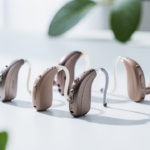
Invisible-in-Canal Hearing Aids: Are They Right for You?
July 15, 2025
Choosing Between Hearing Aid Brands: What Actually Matters
September 15, 2025
The connection between hearing loss and cognitive health is one of the most important — and most underreported — stories in modern healthcare. Here’s what the current research actually says.
The Cognitive Load Theory
When hearing is impaired, the brain devotes significantly more resources to processing incoming speech. This cognitive effort, sustained over months and years, appears to draw resources away from other functions including memory encoding and executive function. The brain is working harder to hear less.
The Social Isolation Factor
Hearing loss frequently leads to reduced social engagement. People withdraw from conversations, social events, and relationships that have become exhausting to navigate. Social isolation is itself a significant independent risk factor for cognitive decline.
What Large Studies Show
A landmark study from Johns Hopkins found that mild hearing loss doubles dementia risk, moderate loss triples it, and severe loss increases it fivefold. A major 2023 study found that hearing aid use reduced the rate of cognitive decline by 48% over a three-year period in adults at elevated risk.
The Good News
The association between hearing loss and cognitive decline does not appear to be deterministic — treating hearing loss appears to reduce the elevated risk. Hearing aids are one of the most accessible, evidence-supported interventions for cognitive health available.
Don’t wait on this. Contact Embrace Hearing to schedule your evaluation. The stakes extend beyond your hearing.
